The three systems are the Visual, the Vestibular, and the Proprioceptive and this is the order of priority the brain uses for inputs from each system to determine where you are, where you are going and what you can do. In my previous posts I’ve dealt primarily with the proprioceptive system so lets look at the other two. The visual system is a vast area and I don’t intend to deal with it here as it is beyond my area of competence.. Instead I will deal with the connectivity between the vestibular and proprioceptive systems as they affect movement.
To remind you I have been dealing with the proprioceptive system, specifically with mobility (range of motion) using the six chain reaction matrices in 3DMAPS.
There are also six stability chain reaction matrices which replace the lunge with a single foot reach which challenges balance and individual leg strength. In a healthy functioning system hierarchy, your brain is able to use these inputs to give you optimum movement, for any purposeful activity, in terms of range of motion, stability and strength in all three planes.
As the Vestibular system inputs outrank the proprioceptive in the neural hierarchy and is known as the balance organ we need to understand it and address any dysfunction. The brain will act to inhibit movement if the inputs from the vestibular system indicate problems. It won’t give you optimal proprioceptive range if the vestibular systems indicate balance problems. It’s self evident in anybody who is ill, injured or getting older, that the brain acts to restrict movement to protect you from damage. But it’s not all bad news, read on.

The important feature to notice is the semi-circular canals which contain fluid and the movement of the fluid over tiny hairs in the canals send signals to the brain. The canals are oriented in three distinct positions which allow movement in all three planes. These canals allow and detect movement of the head up and down, rotating right and left, and tilting side to side. Three planes of motion..
Common Dysfunction
Our problem is that we live life sitting looking forward and occasionally rotating and tilting side to side. You know that’s what we do and even get cautioned from an early age to sit up straight and look ahead. Add to that the things we do with our head in one position for long periods of time, like writing, watching, conversation. This causes the system to lose it’s sensitivity and the connectivity with the proprioceptive system deteriorates. The good news is that it can be restored with simple functional training.
The Remedy
Training with either or both of the six mobility and stability chain reaction matrices stimulates the vestibular system as your head moves up and down with the anterior and posterior chains, side to side with the same side and opposite side lateral chains, and rotationally with the same side and opposite side rotational chains. Before consulting with an optometrist or the Vestibular Disorders Association, try the 3DMAPS matrices.
These three stills show the position of the head in all three planes .
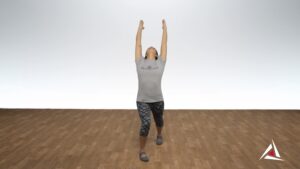
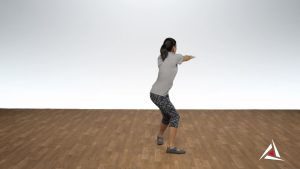
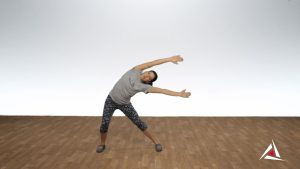
For confirmation that this matrices can stimulate the vestibular system see my previous post The six chain reactions
Vaughan Ebrahim
LTA accredited Level 4
Gray Institute, CAFS 2013, 3DMAPS 2017. FGS , FT 2023